Why a Paper Fold Holds Its Shape
Why a paper fold holds its shape depends on alternating ridges and valleys. Compare fold spacing with a simple paper test and choose a rhythm for your project.
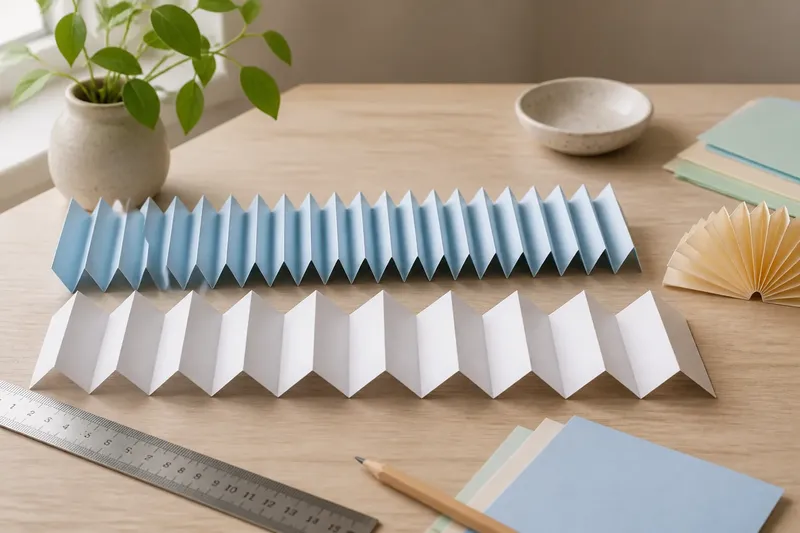
The common mistake with a paper strip is to crease it once, expect it to stay rigid, then blame the paper when it droops. Why a paper fold holds its shape is easier to see in a strip folded back and forth: alternating ridges and valleys resist bending, while the distance between them changes how the strip feels in your hand.
Why does a folded paper strip feel stiffer?
A flat sheet bends readily because it is thin from one face to the other. Fold it into a concertina and the strip gains a deeper profile: the paper rises and falls instead of staying flat. That raised shape resists a sideways bend more than a flat strip does.
The folds also make the strip behave less like one broad, floppy surface and more like a row of connected panels. Each panel can shift a little at its crease, but the alternating peaks and troughs help the whole strip keep its form. The change is physical, not a special quality added to the paper.
Think of a folded strip as a paper version of a corrugated drinks straw. The ridges give a thin material a more substantial shape, although paper can still buckle, tear or flatten if pushed too hard.
What do alternating folds actually do?
Alternating folds turn a straight strip into a repeating sequence of peaks and valleys. A mountain fold brings the crease towards you; a valley fold sends it away. Repeating the pair creates the zigzag profile that gives the strip its spring-like feel.
Crease direction matters because a strip with folds all pointing the same way tends to curl into a stack or roll. Switching direction helps it open into a concertina. The folds do not need to be perfectly identical, but a steady rhythm makes the strip easier to compare and handle.
The creases act as flexible hinges. Between them, each section of paper is comparatively flat; at them, the paper changes direction. Pressing a crease firmly can make it easier to fold in the same place again, but crushing the paper until it becomes fuzzy or split weakens the hinge.
How does fold spacing change the feel?
Closer folds make narrower panels and a tighter zigzag. The strip often feels more springy and compact, and it can open and close through small movements. Wider spacing creates broader panels and a shallower-looking rhythm; the strip may feel less springy and more like a sequence of flat faces joined by hinges.
Spacing also changes how easily the strip bends in different directions. A dense concertina has many creases sharing the movement, while a widely spaced one concentrates more of the bending at fewer hinges. Neither arrangement is automatically better: choose the rhythm that suits the motion or shape you want.
Paper weight and grain can alter the result too. A thin sheet usually bends readily, while heavier paper may need more deliberate creases. If a sheet has a visible texture or seems to fold more willingly one way than another, rotate it and compare rather than assuming spacing is the only factor.
How can you compare fold spacing fairly?
Use two strips cut from the same sheet, with matching length and width. Fold one with close, even intervals and the other with wider intervals; alternate mountain and valley creases in both. Keep your crease pressure similar so spacing, rather than a different paper or folding style, is the main change.
Say you have a strip cut from plain printer paper and want a small paper fan that opens easily. You fold one sample with narrow panels and another with broader panels, then gently open and close each. Notice which sample moves with the compact or broad rhythm you prefer; this comparison does not predict how much weight either strip can hold or how long it will last.
For a hand test, hold each strip by one end and let the other end hang. Lift and lower your hand gently, watching how much the free end swings and how the folds open. Repeat while supporting each strip at a different point: a long unsupported section can sag even when the folded shape feels firm in your hand.
What should you check while folding?
- Strip width: Check that both strips have even edges. If one tapers or twists, recut it before comparing; otherwise, use the even strip and treat the uneven one as a separate experiment.
- Fold marks: Check that the intervals follow the intended close or wide rhythm. If a mark is misplaced, adjust it before creasing; if the marks are already creased, make a fresh sample rather than forcing the old hinge.
- Fold direction: Check for an alternating mountain-and-valley sequence. If two adjacent folds point the same way, refold one in the opposite direction; if the paper resists or tears, start a new strip.
- Crease pressure: Check whether the creases look pressed without appearing crushed. If fibres look fuzzy or split, ease the pressure on a fresh sample; if they remain smooth, continue with the same gentle touch.
- Paper condition: Check for tears or pale, rough crease lines. If either appears, stop folding that strip and try an offcut or a fresh piece; if the surface stays intact, proceed to the movement comparison.
- Handling: Check that both samples are opened by a similar amount and held in the same way. If your motions differ, repeat the comparison with matching movements; if they match, judge which fold rhythm suits the project.
These checks are not about making a perfect pattern. They help you tell whether the result comes from fold spacing or from a wonky cut, a crushed crease or a different way of holding the strip.
Why does a concertina sometimes sag or flatten?
A folded strip can sag when its panels are broad, its paper is very flexible, or too much of it hangs unsupported. It can also flatten if the folds have been pressed in the same direction, leaving the strip to curl rather than open in alternating ridges.
Try changing one feature at a time. If a strip feels too floppy, make a second sample with closer folds; if it feels cramped or awkward to open, try wider spacing. A fresh sample is often more informative than repeatedly forcing an old crease, which can soften or damage the paper.
Fold direction is easy to check on a table. Gently open the strip and look for a regular rise-and-fall profile rather than a rolled shape. If one section fights the rest, refold that crease in the opposite direction and see whether the rhythm becomes more even.
Which paper works best for experimenting?
Ordinary printer paper is a convenient starting point because it is easy to cut and crease. Notebook paper, thin coloured paper and light craft paper offer different feelings under the fingers, but surface coatings, texture and thickness all influence how cleanly a fold forms.
Use scraps for the first comparisons, especially if you want to try several spacings. A ruler and pencil are enough to mark a guide; a blunt folding tool can help make creases neat. If the paper is precious or has a delicate finish, test a small offcut before making repeated folds.
The best choice depends on the object you have in mind. A decorative fan might benefit from folds that open smoothly, while a standing paper form may need a different balance of panel width and support. Treat paper and spacing as a pair to explore, rather than searching for one universal fold.
Which fold rhythm suits a particular effect?
What spacing makes a strip springier?
Closer, regular folds usually make a compact concertina that can open and close through small movements. Try a sample first, because the paper’s weight and the strip’s width also affect how lively it feels.
Do wider folds make a paper strip stronger?
Not in every sense: wider panels alter the profile and concentrate movement at fewer creases, but they do not make the paper immune to buckling or tearing. Choose wider spacing for a broader visual rhythm, then handle the strip gently and observe how it responds.
Why does my folded strip curl to one side?
The folds may not be alternating consistently, or the creases may be unevenly pressed. Lay the strip flat, check the mountain-and-valley sequence, and correct any crease that breaks the rhythm.
Should I score the paper before folding?
For light paper, a pencil guide and careful creasing may be enough. A blunt tool can help with heavier paper, but avoid cutting or scraping the fibres; for coated or specialist paper, follow the maker’s guidance.
How can you choose a fold rhythm for your project?
Start by deciding how you want the paper to move: a small, quick opening, a broad fan, or a strip that holds a visible zigzag. Make a short sample, adjust the spacing, and compare the feel before folding a longer piece. This keeps the experiment focused on one clear choice.
Why a paper fold holds its shape becomes practical once you can read the profile: alternating creases build the ridges, while their spacing sets the character of the movement. Keep a favourite sample beside your work as a tactile reference, and let the finished piece have the fold rhythm that serves its purpose rather than the one that looks most uniform on the page.